IPS vs TN Laptop Screen Replacement: Which Panel is Better for Your Business?
When it comes to IPS vs TN laptop screen replacement, choosing the right panel is more than just a technical decision—it directly affects customer satisfaction, return rates, and your overall profitability. For B2B buyers such as repair shops, wholesalers, and educational suppliers, understanding the real-world differences between IPS and TN panels is essential to making the right purchasing decision.
This guide breaks down the key differences to help you choose the best option for your business.
What Are IPS and TN Panels?
TN (Twisted Nematic) and IPS (In-Plane Switching) are two of the most common LCD panel technologies used in laptop screens.
- TN panels twist liquid crystals when voltage is applied, allowing light to pass through quickly. This makes TN panels cost-effective and fast, but limits color accuracy and viewing angles.
- IPS panels align liquid crystals parallel to the screen, allowing light to pass evenly. This results in better color reproduction and wider viewing angles.
From a replacement perspective:
- TN panels are typically used in budget devices.
- IPS panels are widely used in modern, higher-quality laptops and Chromebooks.
IPS vs TN Laptop Screen Replacement: Key Differences Overview
Here’s a quick comparison of the factors that matter most for B2B buyers:
- Color Accuracy: IPS is significantly better
- Viewing Angles: IPS remains consistent, TN shifts noticeably
- Contrast & Black Levels: IPS delivers deeper blacks
- Response Time: TN is slightly faster
- Cost: TN is cheaper, IPS offers higher value
For most replacement scenarios, the decision comes down to cost vs user experience.
Display Quality Comparison
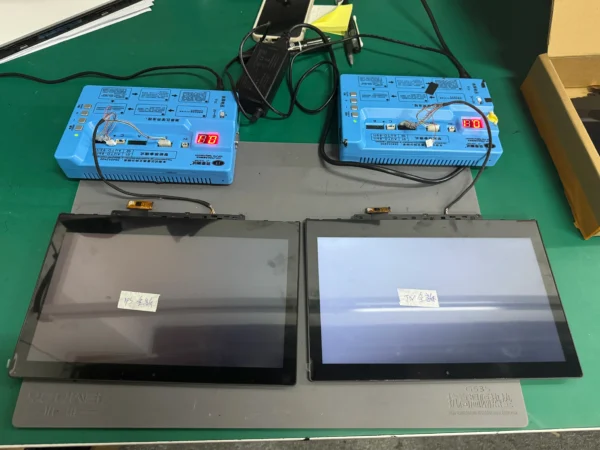
One of the most noticeable differences between IPS and TN panels is display quality, especially contrast and black levels.
- TN panels often struggle to display deep blacks, which can appear grey or washed out.
- IPS panels provide richer blacks and more consistent brightness across the screen.
The difference becomes especially clear in darker scenes:
For B2B buyers supplying schools or offices, this directly impacts user experience and perceived product quality.
Viewing Angles and Real-World Performance
IPS panels outperform TN panels when it comes to viewing angles.
- TN panels suffer from color shifting when viewed from the side. Colors can invert or fade, making the screen difficult to use unless viewed straight on.
- IPS panels maintain consistent color and brightness even at wide angles.
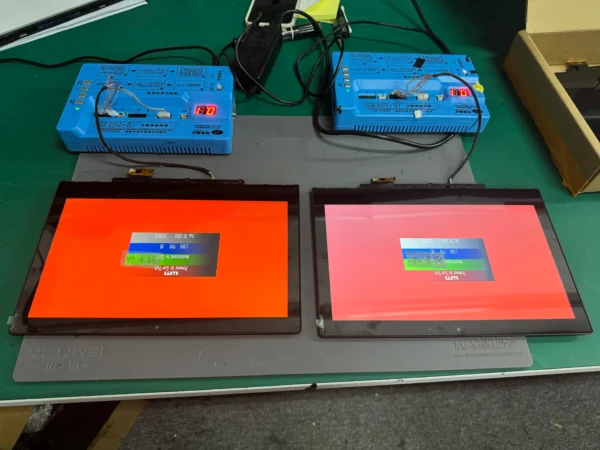
This is particularly important for devices like Chromebooks used in classrooms, where users frequently tilt screens or share devices. The Lenovo 300E 2nd Gen Screen Assembly, for example, benefits from IPS panels for better viewing and usability in educational settings.
Performance vs Cost for B2B Buyers
TN panels still have one advantage: lower cost and slightly faster response times, which may be relevant for specific gaming scenarios.
However, in most laptop replacement situations, speed is not the priority. B2B buyers should focus on:
- Reducing customer complaints
- Lowering return rates
- Improving perceived product quality
IPS panels generally perform better in all these areas. While TN panels may reduce upfront costs, they often lead to:
- Higher dissatisfaction
- More returns or replacements
- Lower long-term value
IPS panels, though slightly more expensive, offer a better balance between cost and performance.
Final Verdict: IPS vs TN Laptop Screen Replacement
For most B2B scenarios, IPS panels are the clear winner. Choose IPS if you want:
- Better display quality
- Wider viewing angles
- Higher customer satisfaction
- Lower return rates
Choose TN only if:
- Budget is the primary concern
- End users have minimal display expectations
As the market continues to evolve, IPS panels are becoming the standard for laptop screen replacements. Investing in higher-quality panels improves user experience and strengthens your reputation as a reliable supplier.
If your goal is to deliver consistent quality and reduce after-sales issues, IPS is not just a better screen—it’s a better business decision.